
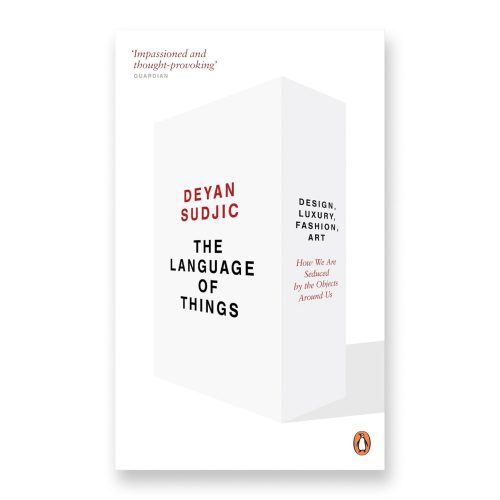
Picking up The Language of Things and reading the blurb, I wondered whether I’d stumbled upon something rather pretentious. It’s a cultural analysis of how everyday objects, luxury goods, and architecture shape our desires, identity, and behaviour. Sitting alongside books by Susan Sontag and John Berger, it looked like it might be rather heavy going. However, a quick flick through the pages suggested something surprisingly readable. So I took a chance.
Deyan Sudjic explores how design manipulates our emotions and communicates status through a coded language of shapes, materials and branding. Which sounds like pure designer BS as I write this, but Sudjic makes it surprisingly relatable. I particularly connected with his observations about the tension designers face between creating timeless, functional objects and inventing fleeting trends to stimulate sales.
His thoughts on luxury also struck a chord. Sudjic explores how craftsmanship and quality have given way to artificial scarcity, celebrity branding and manufactured desire. It made me think about our obsession with oversized SUVs, inflated body aesthetics and countless unnecessary purchases. All part of the modern-day peacocking designed to impress an increasingly vacuous audience.
I also enjoyed Sudjic’s discussion about the difference between art and design. He suggests that the more useless an object becomes, the closer it moves towards art and away from design. I’m not entirely convinced. Art can move us, stir emotions and surely that serves a purpose? I’ve always felt the distinction lies more in why something was created. Was it born from a desire to express something, or from a brief to solve a problem? Perhaps both views can be true.
Despite these interesting ideas, I struggled with parts of the book. I finished it feeling that much of what I’d read hadn’t really stuck. I’m not sure I can wholeheartedly recommend it, but perhaps some of those ideas will resurface when I least expect them.